
Why matcha?
The short answer? Matcha is special, delicious, full of helpful energy, and an overall powerhouse for your body and soul.
The long answer? Well, that starts across the Pacific, in ancient Japan, where the Samurai lived by The Way of Tea (matcha tea ceremony) to help them sharpen their focus, concentration, and patience in order to prepare for battle. Now, I doubt you’ll be leaving Village Matcha and heading into battle on any particular day, but I would gamble my earnings on the fact that you will likely be wrangling a toddler into a carseat, waking at 2 am to nurse your newborn again, or attempting to convince your 6-year-old that no, you really can’t fly to Australia tomorrow to stay at the Bluey’s House AirBnB (true story). I believe that modern family life requires just as much focus, patience, and commitment as those ancient Samurai battle grounds, and I also believe that matcha is the answer. The answer to everything? Well, maybe not. The answer to calm, sustained, focused energy, though? Yes, yes. And more yes.
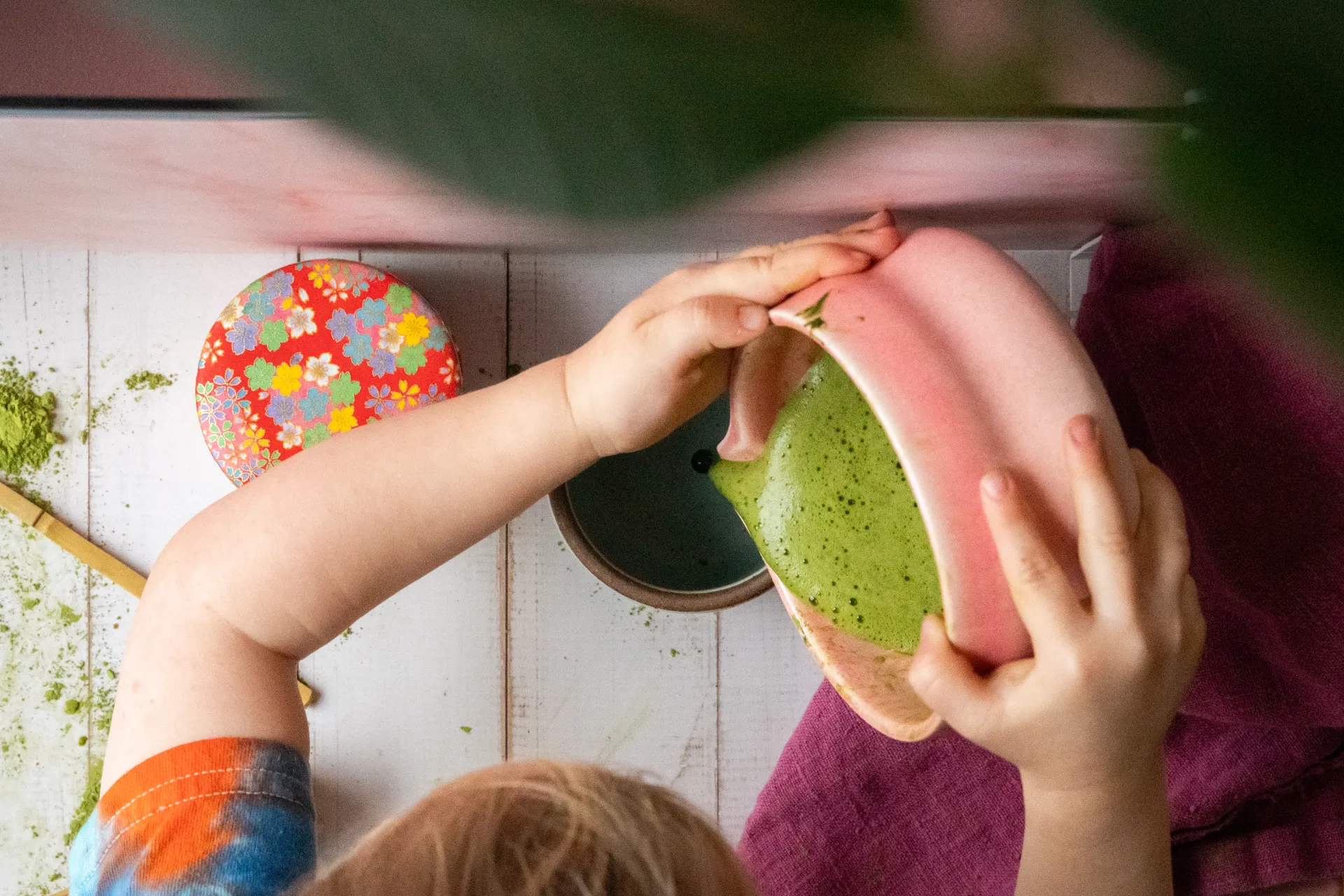
A Different Kind of Energy
Each morning, I begin my day with a matcha latte. And I often make my way back to my kettle for several more before the sun goes down. In fact, I even travel with my electric milk frother, oat milk, and matcha tin and whisk. Matcha is AMAZING. And for someone like me, whose body could never handle coffee anyway, it’s my lifeline.
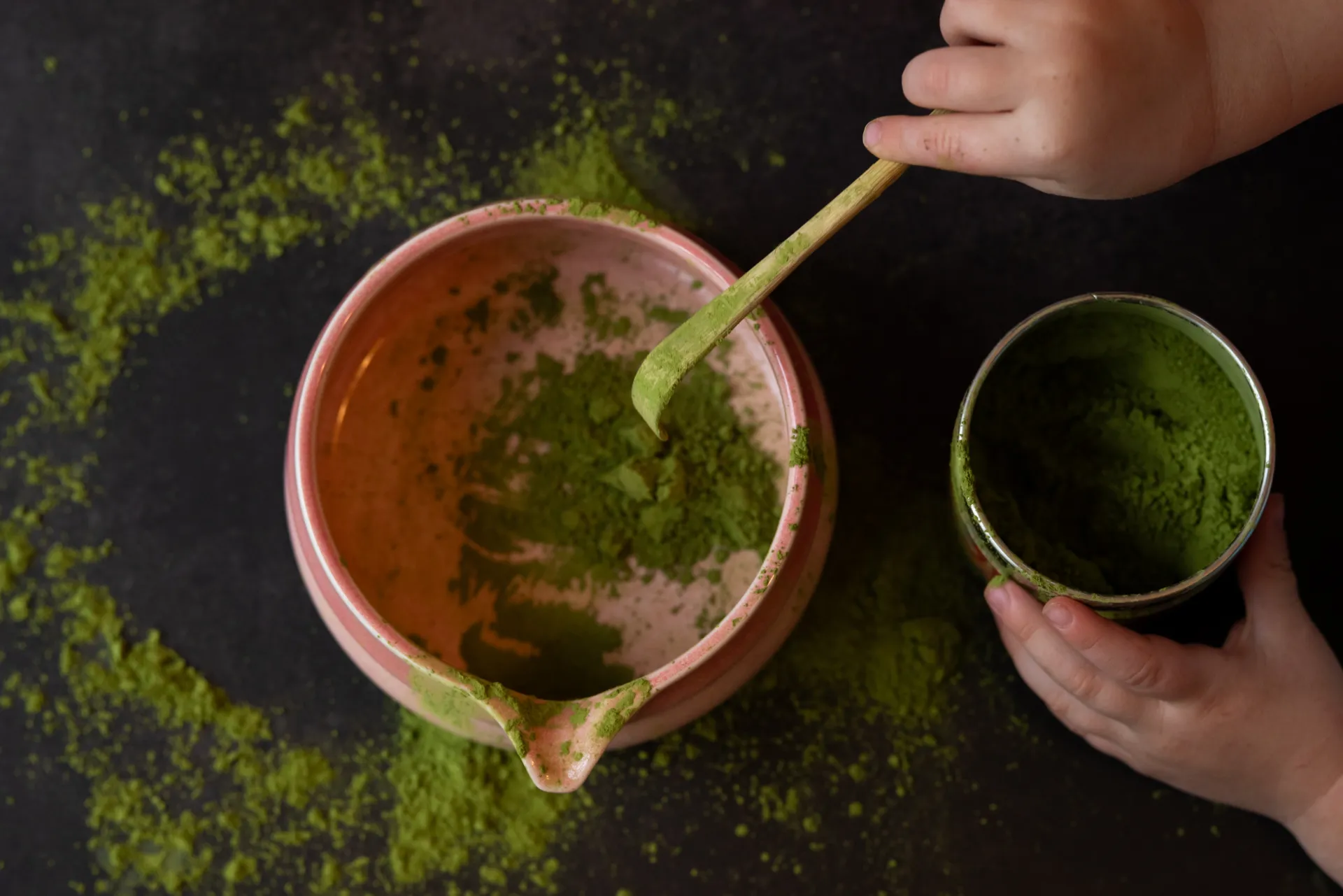
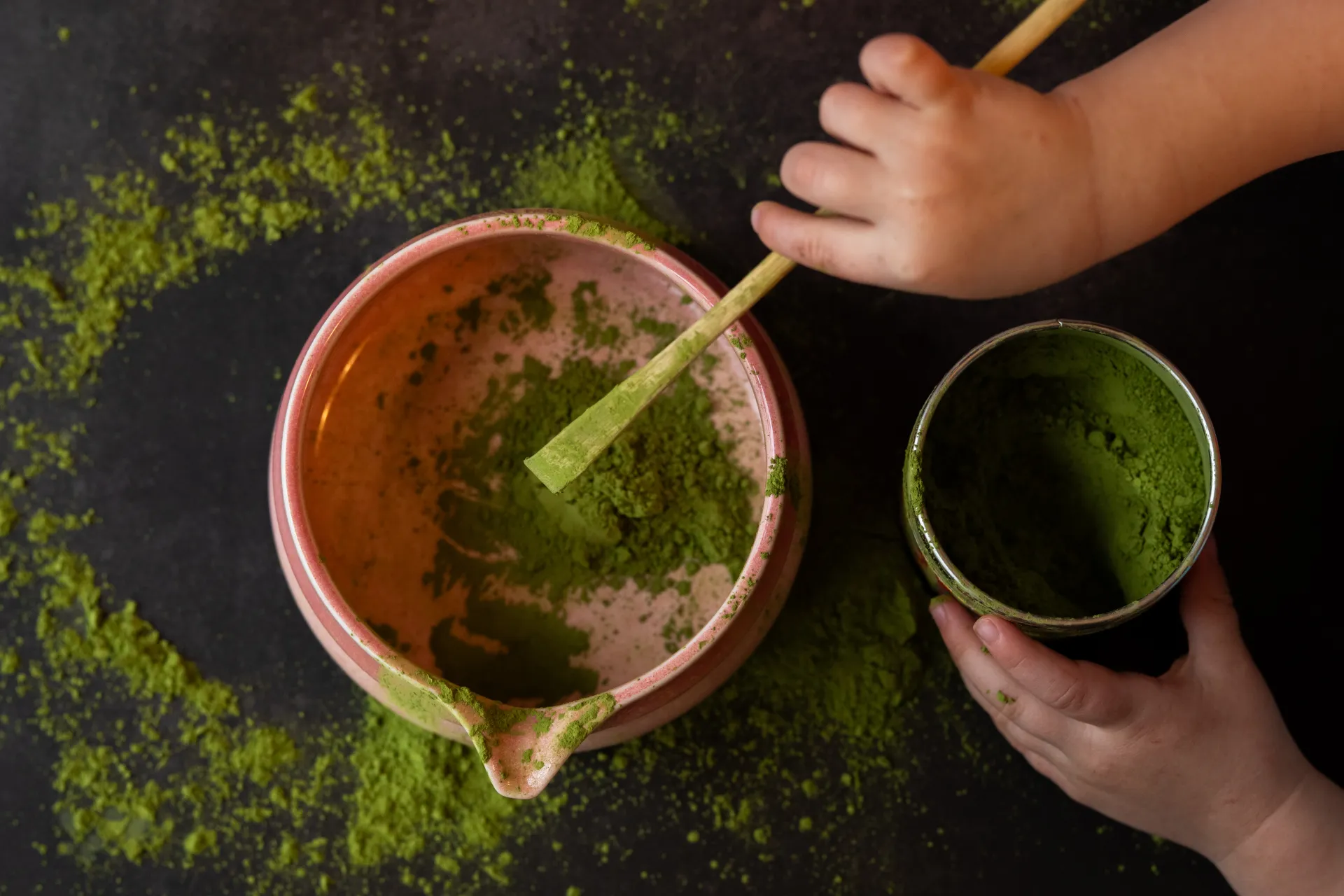
Now, what exactly is it? Well, like I said, matcha is special. Like most teas, it comes from the plant camellia sinensis, but unlike other teas whose leaves are used for brewing and then discarded, matcha is shade-grown, dried, and stone-ground into a beautiful green powder (as long as you’re getting the good stuff – don’t ever try those muddy brown “matchas” sold at your corner store). This means that the entire leaf is consumed, intact with abundant antioxidants and polyphenols.
Matcha has been shown to aid in gut health, as well as support heart health, brain health, and the immune system. The best matchas (in my opinion) are spring-harvested, and believe it or not, matcha flavors can differ dramatically from source to source. I’m still developing my matcha palette, but my current favorite matchas contain rich umami notes, nutty toasty undertones, and gentle, sweet finishes. Matcha also happens to have a naturally high caffeine content compared to other teas (aiding in that sustained, beautiful energy boost it provides).
Note: Information provided is for educational purposes and not intended as medical advice.